“[A good artist is] one with imagination and the ability to tell a good story. How well a man draws cuts no ice with me, if what he’s trying to express comes out vague and choppy.” ‐ Jack Kirby
(Sherman cited in Morrow (ED.) 2004, (vol.1) p. 181).

Saturday, October 12, 2013

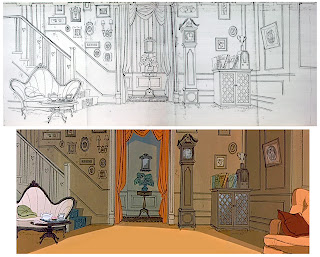
Examples of In class 'Layout' exercise.


Not highlighted on the images, but you get the idea. Possible deconstruction of animation layers/assets. Let's just get 1 done, as some of you stil have a fair bit of work to do for last assessment. Will show some examples in class to help in week 12, with a warning to get all the in-class exercises done for week 13. Final large assessment due week 14.
By Claudia Jakubowski- 2012

Thursday, September 19, 2013

OF interest- 3 minutes. and a neat little story/edit.


Ok, interesting: someone has taken a Classic 'Dexter's Laboratory' episode, and condensed the crux of the episode into just under three minutes. The length of your final assessment.

Using the episode itself, it's basically an exercise in editing. With the use of montages, but still keeping a three act structure, conflicts to overcome in act 2, a climax and resolution/return to status quo, we see a full emotional journey and change with our lead, and understand the whole thing.

Keep this in mind when doing yours/trying to edit your previous scripts to three minutes or less. Therein lies the challenge of storytelling.

All the slides should be up at L@GU, will throw up clips from this week's class soon. Still working through the email scripts. Thank you for those who send story beats and short 3 minute scripts, rather than 10 minute scripts and block text pages I have to go through for others...you know who you are haha- you guys are killing me :P

Monday, September 16, 2013

Week 8 2013: Some Genre clips and class reminder recap

Hey guys,

Slides from week 8 will go up this week, had to shoot interstate after class last week, and returned tonight, so am a little behind on things, including all the feedback on the scripts/stories currently sitting in my inbox. Have touched base with a few of you, but seems the 5-6 minute +  scripts plus various treatments/long form scripts are taking far longer to read than first planned (Don't forget, it's only 3 minutes...trim excess) So hopefully in the meantime you all are doing what I've suggested and continue working on the project until I can touch base with you, either in class or via email.

Essentially, your chosen stories will be fine, it's just a case of making them "doable" in the context of the final assessment, and having the thing make sense.

In the meantime, some of you were chasing a task list for the final assessment. Let me get that sorted ASAP, I still have much to do on the script reading/feedback front, so bear with me. The important thing is, as I said above: "KEEP WORKING".

Hope the following helps to re-clarify: straight from the Course Profile from GU:

Create a story for a predominantly animated short film, however this is not limited to cartoon style
character animation. The story should be around 3 minutes long.
Deliverables include:
visual development artwork (environments, character profile and design, preliminary sketches and reference image folio),
storyboard (including text/dialogue elements, sound design direction and general directors notes).
examples of moodboards of two sequences of varying tones
Full-colour Treatment image (style, genre, proposed visual treatment) - The "look" shot
3 or 4 correctly structured layout or pre-viz shots that concur with industry standards
An animatic is also required that indicates broad timing and pacing for the project.
Further details  and delivery instructions to be announced in class and with assignment handouts in week 2. The project is designed to develop a feasible script for possible production as a graduating project during the program. this is NOT intended to be the final idea that will be made, but a draft development exercise in realising the range of aspects that need to be determined to develop a good short project
NOTE: It is essential that this assignment be developed over the course of the semester, with demonstreted weekly updates on progress and creative development included in the deliverable. Each of the in-class exercises should be attempted alog the theme of this final projecct to develop the idea in many iterations.

Criteria and Marking (Weight 50%): 
Appropriate Visual realisation for Story 15%
Creative Innovation 20%
Effective story structure 20%
Technical realisation 20%
Demonstration of iterations and development of the story 15%
Adherence to the brief 10%


Anyways, quick recap of some of the clips from week 8:

Spot the shots and compositional rules in use in the example of the various genre clips we watched in class:


The other two clips we watched were 'Drip -Along Daffy' and 'Rocket Squad', both featuring Daffy Duck and Porky Pig in various genre/genre mash parodies, which incorporate the various characteristics


Tuesday, September 10, 2013

Reference Recap Clips Wk7 2013

Hey all,

Clips from last week's 'Reference' class.

Oh, remember to send me your scripts/story ideas. I have quite a few coming through now to read, so give me a bit of time. In the meantime, keep referencing, thumbnailing shots, character designs etc. It's week 8, and after the break in week 11, your work-in-progress will be reviewed before the final in-class presentation in week 4.

If you're not doing a pre-existing script, and your idea is new, try to think of your plot/story as simply as this:
> What Genre? Does it need one?
> Character/s?
> Setting/Era?
> What's it about?

Traditional Narrative Arc: 
 - Normality
 - Inciting incident
 - complication/s and escalation
 - low point, which leads to
 - Climax
 - Resolve: return to status quo or 'new world order'.

> What's the Style? How do you want it to look? 

(And start finding references, and arranging them into a files structure/matrix for YOUR benefit and assessment :D )

Have fun, and email me if you need assistance/sounding board : pmason83@gmail.com


Chuck Jones; referencing the style of the old "Hardy boys" style of novels, historical references etc. Note the smearing style of animation in the fast action movements of the cartoon, and the fantastic character posing employed by Jones.


Jackie Chan: Referencing the silent movie directors of old with his take on physical comedy and martial arts/Peking Opera style action scenes.

For some strange reason, I can't get a clip from the 'Project: A' Clock Tower scene due to some copyright/region thing. Anyway, you guys remember. Here's the reference for that scene.


Some more from last year: http://www.masonnotes.blogspot.com.au/2012/08/week-6-clips-recap.html

Thursday, August 29, 2013

Week 6: Extra Comic pages and some of the brief comments from Tutes.

Harvey Kurtzman: Corpse on the Injim. p5. Frontline Combat, or Two-Fisted Tales- can't remember which ;P. A story with great usage of the passage of time in panels, posing/shape dynamics, empathy with the audience (YOU are involved in the story) and the use of "zooms" and shot selection to emphasis the mood and drama.

Will Eisner: The Casualty. p2-3. 'Last Day in Vietnam. Example of Eisner going beyond the confines of the  gutters and panels  to still tell clear, concise and entertaining stories. In silence, no doubt. Empathy through subject and pose. Eisner was the Master of expressing an emotion through a gesture or pose.

Eisner: Last Day in Vietnam. P16-17. Closure- we understand "we're" in a helicopter by the visual clues given, and fill in the rest with our mind (suspension of disbelief). Again, gutterless/no panel borders, but clarity to a T. Depth created through the use of shadows and scale- plus, ultimate empathy: the "main character" is talking directly to us, as if we're part of the story.

More from 'Last Day in Vietnam' by Eisner.

The following four pages are the first four pages in "Lives" by Glenn Farrington and the Fillbach Brothers. The Fillbachs made me sit down and read this on the spot at SDCC 2013, and I can see why. They wanted to see my reaction first-hand. It's a fantastic single -issue, one of the best I've ever seen in comics. Uses the language and potential of the medium beautifully. By that I mean in terms of panel information, the passage of time, clarity, layouts and utilizing the physical medium: the unknown turn to the next page.

See how repetition of layout and camera choice per scene is used, and the devices to show passage of time (water drip, made/empty beds), to communicate and introduce 5 separate (and eventually converging) characters. 


How much do we learn about the state of mind/background of a character through "aspect to aspect" panels (McCloud), on just one page, and with no dialogue?

The complete Comic short "Rubble". Recommended to me originally by cartoonist Howard Chaykin, and I'm forever thankful to him.
An epic story of life, loss, and the human cost of war in 6 pages, over a 5 year period. Layout and establishing shot repetition used again super-effectively. That's why Kurtzman is a storytelling master in comics too, even doing layouts for all the other Frontline Combat/Two-Fisted tale stories.
Would this have the same impact if told as a film?


See you all next week. Cheers.


Week 6: Sequential Narrative: Tute recap

Lecture from Week 6 Sequential Narrative is now available at Learning @ GU. Also read the previous post on this blog please :)


Ok, so just a brief recap on most of the examples we watched in class this week. Pay particularly close attention to the choices in camera, and the movements, that are used to tell the story. As some of you pointed out in class, very little dialogue is used to covey what a character is thinking, feeling or doing.
Which goes back to the point of "SHOW, DON'T TELL".

With many of the shots below (particularly the animated examples) it is plain to see the importance of perspective in relation to creating your 3D world on the 2D plane of the page/screen.

Sergio Leone's 'The Good the Bad and the Ugly'


For the life of me, I couldn't seem to find a proper formatted version of the opening sequence. However, you get the idea. A couple of things to take note: The often-used trademark of Leone's directing of cutting between grand long shots, with close ups of gritty faces, often of incidental or no-name characters. Not only sets the mood and tone of the world/period depicted but it's almost like the faces themselves are landscapes or settings. You know what I mean ;P
Also, the longer, relaxed pacing of the overall film (you need to rent this for sure.) From a storytelling/shot selection point of view, it's engaging in a sense that really, we're just watching a posse walk down a "street". But the choices made are interesting to the audience. And lastly, the fight. We don't see it, but our minds allow to piece together what happened (CLOSURE). And in one shot of the main character bursting thru the window, juxtaposed with highlight music theme, the words "ugly" which a comedic overtone, we have a little bit of empathy and engagement with him already (through comedy, and his obvious "skill" of cleaning up other gun fighters.)


The intense little scene where Lee van Cleef's "Angel Eyes" sits down to eat with Stevens in his home- remisinent of the Tarrintino 'Inglorious Basterds' Opening scene with "Hans Landa", because of the similar character interaction, choice of using Close ups/Extreme Close ups, subjectively drawing the audience right into the middle of these tense conversations, ending with the musically highlighted violent conclusions. The use of the POV shot at the end when the wife passed out is a nice transition into the next scene.


A selection of still frames to refresh your memories of the camera conventions used in the 'GB &U" scene. The point of showing you these seemingly mundane "talking" scenes is to show you the possibilities in creating conflict and tension in your stories through not only script, but more so through your choice in camera, movement and composition, particularly in scenes which are basically two guys sitting at a table.


Acting helps too ;) But when you're an animator, you drive the acting.

Fleischer's "Superman": The Mechanical Monsters.


One of my all-time favourite cartoon shorts, and my favourite in the series. Take note of the many uses of Upshots, Down shots, POV shots, Camera movements such as 'Tracking shots', that 'Dutch Tilt' establishing shot at the Museum...there's heaps in this cartoon. Plus, the diagonals at play in every composed shot.

The use of shadow and the silhouette is used throughout this short, and adds for an interesting storytelling device (what is shown, what is left for the audience to imagine).


Depth of field in play, and a nice composition example of using a darker foreground element to draw the eye into the main focal point (the primary-coloured 'Superman'), wit a blurred, soft/cool coloured background.)

Upshot, diagonals.


Depth from light/dark elements, composition seems "claustrophobic", as Superman is trapped under the fire and beatings administered by the mechanical men.


Notice these shots cut back and forth between one another when the Robot returns with the cash, and how the diagonals "balance", between one another.


The shots above and below are part of that tracking shot that takes the audience from the lab (where Lois was last seen) to where the mad scientist has Lois in an elaborate death trap. What is interesting about the tracking shot is the "pockets" of information we are fed about the location and it's relation to the lab, where the robots came from and what's in-store for Lois and Superman, without one word of dialogue, or cut to another shot. Storytelling through composition and camera movement.


Now that's a Down Shot!


A great long shot, using diagonals again, and light/dark elements/depth of field to  create that powerline focal point.

I really like the poses the Fleischers utlised in their series. I'd say the above example is almost "contrapposto", but the feet seem to have even balance. Nevertheless, far more interesting to look at than just an evenly balanced stance.

It's also a point towards the fact that apart from the closeup of Superman using his X-ray vision, we never see a close up of Superman, or even rarely a medium shot of him in action. They are almost always a full body, or an 'American' (cropped to knees) shot. What does this mean? ;D

We learnt that "power" is conveyed through upshots, such as the ones always used to show the robots. Is it that the feats of Superman verses the dangers he faces in his environment need to be shown, and therefore his characterization (in costume) comes from his abilities? Curious to know your thoughts.

POV shot.


Great Close up/POV shot of Lois.


Huge POV Upshot!
Gotta go, see you next week! Don't forget, I want to see your Koala exercises, thumbnails and you MUST GET A FINAL ASSESSMENT STORY IDEA NOW!

Tuesday, August 27, 2013

Week 6 2013- A New Year for 'Visual Story'

Hey all,

Apologies for this frantically short and quick message. Will be making a post which should be up by Friday which will recap on some of the things we touched on in the 'Sequential Narrative' lecture and tutes, plus uploading a copy of the images and points to Learning @ GU.

A couple of quick things:
Make sure next week you have an idea or draft of the story you want to do for final assessment. Shoot me an email if you need any help at pmason83@gmail.com

Some students last year (and a few mentioned in the tute) that they were going to use their scripts from 'Scriptwriting'. DO THAT! It's easy- you could virtually start thumb-nailing and gathering references now ;)

Also, I noticed the majority of the class turned up for the first tute, leaving only a handful or less of students for the second tute. The problem is I will struggle to touch base with you guys/give feedback and help for all of you in the first class, whereas the afternoon session, I had plenty of time to chat with the guys in the afternoon...Trust me when I say, the students last year who gained more out of the course were the ones that communicated with me, rather than the ones who ducked off early or didn't share anything. At the end of the day, it meant some stuff came across as "undercooked" or didn't make a whole lot of sense. I would love to be able to help people or point in the right direction, given the opportunity ;D

Will touch base again in a day or two with notes/images etc. from Tuesday's classes, take care all. Next week I also want to see the Koala exercise, and maybe the results of some of your thumbnailing from Tuesday. Remember, scribble it down quick! Don't noodle on something that doesn't work ;D

Cheers, folks!

Saturday, November 17, 2012

...And on the Seventh day, he rested.


Congratulations all of you for completing your uni subjects for the year (including this one). It was my first uni lecturing position, and hopefully not my last. I very much enjoyed meeting you all, I'm sure we'll see each other again around the halls of QCA, and I look forward to seeing your ideas come to fruition in 3rd year and beyond. I hope you got something out of the subject this semester, and realise the importance of visual storytelling, clarity, empathy creating, and entertainment in our respective mediums. 

You'll never be able to watch a film or read a comic book again without pulling it to bits later. ;P Sorry.

And thank you for dropping by my table at the recent Brisbane Supanova. Your happy faces (even Tessie's ;P) are up on the Soldier Legacy website and facebook page too. If I don't see you beforehand, Merry Christmas, enjoy the break, and good luck in the future :)


Thursday, October 25, 2012

Reminder: Final Assessment 2 Deliverables Due Tues WK14 by 4pm


Reminder: Final Assessment 2 Deliverables Due 
Assessment 2 for Visual Story is due next week (wk 14) on Tuesday the 30th October by 4pm. Update shortly to confirm how to do so, will be most likely via the Dropbox or Teaching Computer like last lesson.

Make sure the assessment has your name and student number, a folder with PDFs etc. in the 'Paul Mason' folder would be the best bet.

Email me if you missed the presentation component, I know there were a few faces missing, or were there and then disappeared. Thank you for your patience on the day, and I hope the feedback was helpful.

Friday, October 12, 2012

In Class Exercises due Week 12


Working against deadlines myself, we're almost at the end, guys :D Just a few weeks for all of us.

Just re-iterating that the In-class exercises are indeed due this coming week, just so that it's out of the way for you to be able to get a presentation done for week 13, and finalized files from Assessment 2 for week 14.
Try to get the exercises together as a PDF by Tuesday and uploaded to 'Learning @ GU', under the 'In-Class Exercises' tab on the Discussion board (already up if you go check the 2107GFS tab). Easy :D

Any scans and revisions are welcome, as I bet you've learnt some things since the first few weeks :) Otherwise, all good, PDF away. Any problems, such as a file being too big to upload, email me. I recommend if you have any issues like this, leave a message on the 'Learning @ GU' discussion forum, and email me the bigger file via www.yousendit.com

See you all Tuesday :D Info re: Week 13 and 14 in class.

Wednesday, October 10, 2012

Emma Coats's 'Story Shots' blog.


A great Tumblr blog from Pixar's Emma Coats. Here's a few Q & A's, but check out the main feed for more great Storyboarding/Concept/Storytelling/ Characterisations/Dialogue tips and theories!
http://storyshots.tumblr.com/post/33352307768/questions-answering-some-questions

Week 11 Tute Clips Recap

Ok, so we looked at Editing, and more clips showing various examples of pacing, camera conventions/shot selections at work, in conjunction with the editing of the films. Think about what information is being presented, how juxtaposition of the images together create a new meaning or element of the story, what the audience knows in relation to what the characters know, and think about some of those theories and "rules" from the lecture notes (Already waiting for you at 'Learning @ GU'). Such as:

Director Edward Dmytryk's :

•"Rule 1: Never make a cut without a positive reason."
•"Rule 2: When undecided about the exact frame to cut on, cut long rather than short."
•"Rule 3: Whenever possible cut 'in movement'."
•"Rule 4: The 'fresh' is preferable to the 'stale'."
•"Rule 5: All scenes should begin and end with continuing action."
•"Rule 6: Cut for proper values rather than proper 'matches'."
•"Rule 7: Substance first—then form." 

(First one from last week which touched on Editing too: http://masonnotes.blogspot.com.au/2012/10/week-10-clip-recap.html)

Oh, and remember in class when we talked about rhythm, tempo, alternation etc. in editing? I recommend rewatching 'The Good, the Bad and the Ugly' clip for a great example: http://masonnotes.blogspot.com.au/2012/08/week-3-recap-on-tute-film-clip-examples.html


A continuation of the pacing used throughout the film by juxtaposing scenes/shots and cuts with music from the era (and the subject matter of the music too with the themes from the film/historical context). Malcolm X's assassination, cut with (close friend) Ali's reaction to the news. The context also being that (in the film) the last time they spoke, Ali was upholding the wishes of 'The nation of Islam' to sever ties with ousted minister Malcolm X. Clearly, he is still hurt by the lose of his friend.


Compare the long cuts, medium to longshots employed by Hong Kong action films, as opposed to the quick cut, close in shots many American films use- perhaps a more a commentary on the skill of the Actor and stuntmen in Hong Kong cinema. Also, this, like many JC sequences, would not have been planned out until a visit to the set, in order to find a way to incorporate the surrounding environment (and props you may find in that location) for the scene to be choreographed.


The quick close up shots pieces together give you a bigger picture of the action that is taking place- spinning rims, reflection of enemy cars on paint work, rear view mirror glances, bullet belts, gear sticks- yep, it's a car chase :P. As the environment becomes part of the action/dangers surrounding the cars escalates in the scene, the shots become longer, and the camera wider to accommodate.


As mentioned in the presentation in class, there are a number of things going on in this sequence- using camera conventions and shot selections, the focal points are edited to always keep your attention to the main important elements that are occurring in the frame- edited between the baby being baptized, Michael Corleone become a 'Godfather' to his nephew, and also becoming a 'Godfather' of the Corleone crime family as his enemies are "taken care of". Juxtaposition with the holy ceremony and the "unholy" murders, sold through editing, composition and the pose/expression on 'Michael Corleone's' face.


Note the focal point between the shots following are the same- this happens throughout the sequence/changes in location (McCloud's "Scene to Scene").


For sheer timing in editing, you can't go past looking at a Road Runner cartoon by Chuck Jones. The expression/pose, sold by the timing, makes the joke work. Not the one we watched briefly in class, but you get the idea. Note the Cartoon physics law in play "Coyotus Interuptus" http://listics.com/200408022076 :P :P


Another form of montage, or "THE" montage- Rocky.

I've "gotta fly now" (lame), but email me if any issues.

Assessment 2 help: Visual Script development

Ok, a couple of you wanted to double check this, hence the reason behind this post :)

A couple of rough examples of what each submitted element should (roughly) look like. Obviously, this will vary according to your style etc. etc. Any questions, email me!

Also, for those who needed that quick rundown of Adobe After Effects/Premier in class for the animatic process, and have forgotten any steps needed to complete yours, email me and I can walk you through it. Otherwise, there's still 2 weeks after next week, I can help you out in class.

So as you know, the assessment is: (my comments in red)
"Create a story for a predominantly animated short film, however this is not limited to cartoon style
character animation. The story should be around 3 minutes long."

If you have a script, great. If you don't, a story breakdown/synopsis is perfectly fine. IF you're taken a fable and adapted it, and have made any changes for story/logic reasons, state this too :)

Deliverables include:
"visual development artwork (environments, character profile and design, preliminary sketches and reference image folio),"

So, Mood boards/reference folders categorized into environments  costumes/characters, props etc. Basically, if for example your character is a samurai, and you've designed a turnaround shot of a samurai, I want to see images of where you were inspired from, what's the Armour look like, is it the correct century your story is set in etc.

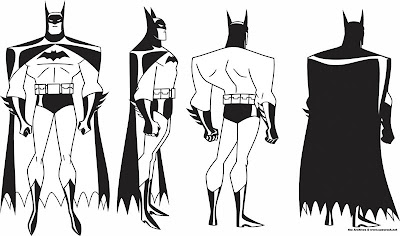
Let's pretend I'm doing a character called "Batman", featuring a short sequence with a Tank/Sports Car-like "Batmobile", in a dark city, and some goons to fight. Some Concept stuff might look like this.


Etc. etc. You get the idea. Check your lecture notes on "Thumbnailing" and "Referencing"


"storyboard (including text/dialogue elements, sound design direction and general directors notes)."
Thumbnails, Roughs and the proper clean up storyboards, compelee with camera movements, arrows etc. where applicable. Try to present storyboards in any of the ways shown in class. There are templates available for the 3 panel widescreen film style in the Course content tab- inclass exercises-Exercise 2: Camera Conventions Folder at Learning @ GU, or on the Right hand side of this blog for the 3 across 2D animation still boards. 3-6 panels a page is fine.
Template at Learning @ GU, or click and "Save As"


"examples of moodboards of two sequences of varying tones"

A Typo: Do Colourboards instead (Moodboards are part of referencing anyway). See Week 9 Lecture notes.


pixar-incredibles-lou-romano-colour-script.jpg

"Full-colour Treatment image (style, genre, proposed visual treatment) - The "look" shot"

WHAT WILL YOUR FILM LOOK LIKE


"3 or 4 correctly structured layout or pre-viz shots that concur with industry standards"

See Andi's Week 10 notes on Layout and Pre-Viz, and try to include field guides (templates under the Graticules folder in Course content tab.


Or 2D examples:


NOTE: If your project is live action, still do this as if it was "Set design", much like the character turnaround shot would be "Costume Design".

"An animatic is also required that indicates broad timing and pacing for the project."

Either 3 minutes of rough "key" shots, or 1.5 minutes of "every" intended shot is fine, if a full 3 minute animatic is too overwhelming. Do your best. Also, you don't need dialogue or sound effects, but a bit of appropriate music might be an idea to help with your intended editing/pacing/rhythm  


Further details  and delivery instructions to be announced in class and with assignment handouts in week 2. The project is designed to develop a feasible script for possible production as a graduating project during the program. this is NOT intended to be the final idea that will be made, but a draft development exercise in realising the range of aspects that need to be determined to develop a good short project